documentary short
The Effects of Climate Change at Muskauer Park
»We notice that it’s increasing exponentially –
and what actually still looked like a cohesive beech forest five, seven, eight, ten years ago
is now becoming very patchy, which then again reinforces the initial effect.«
About
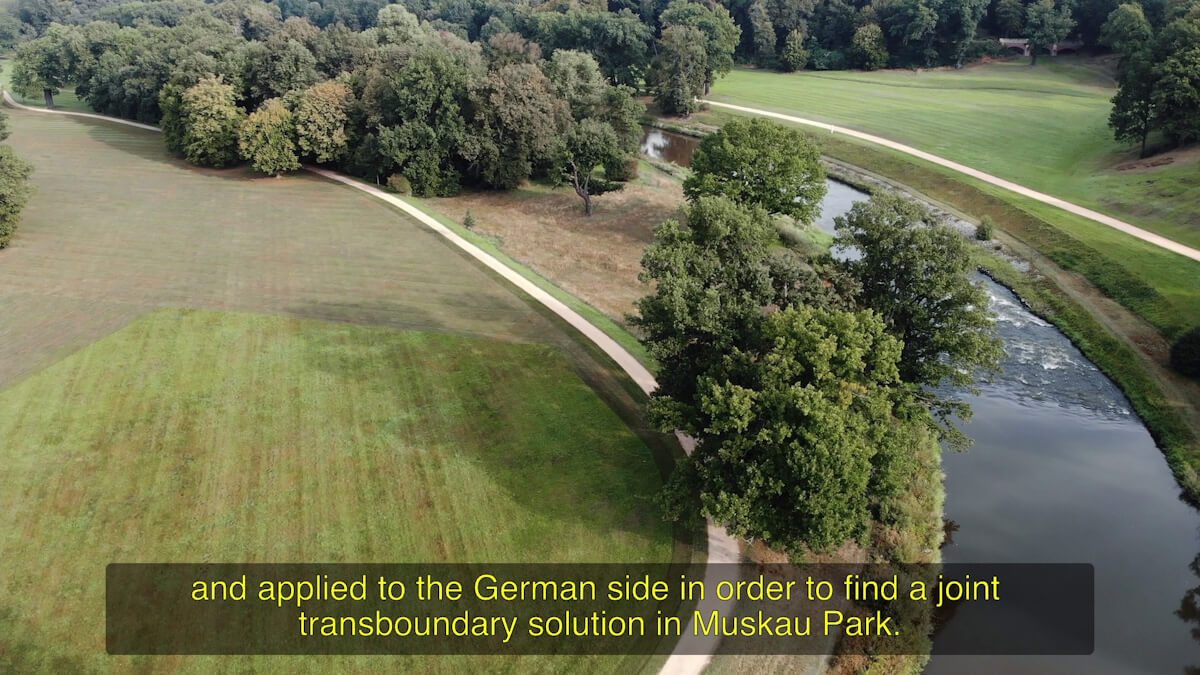
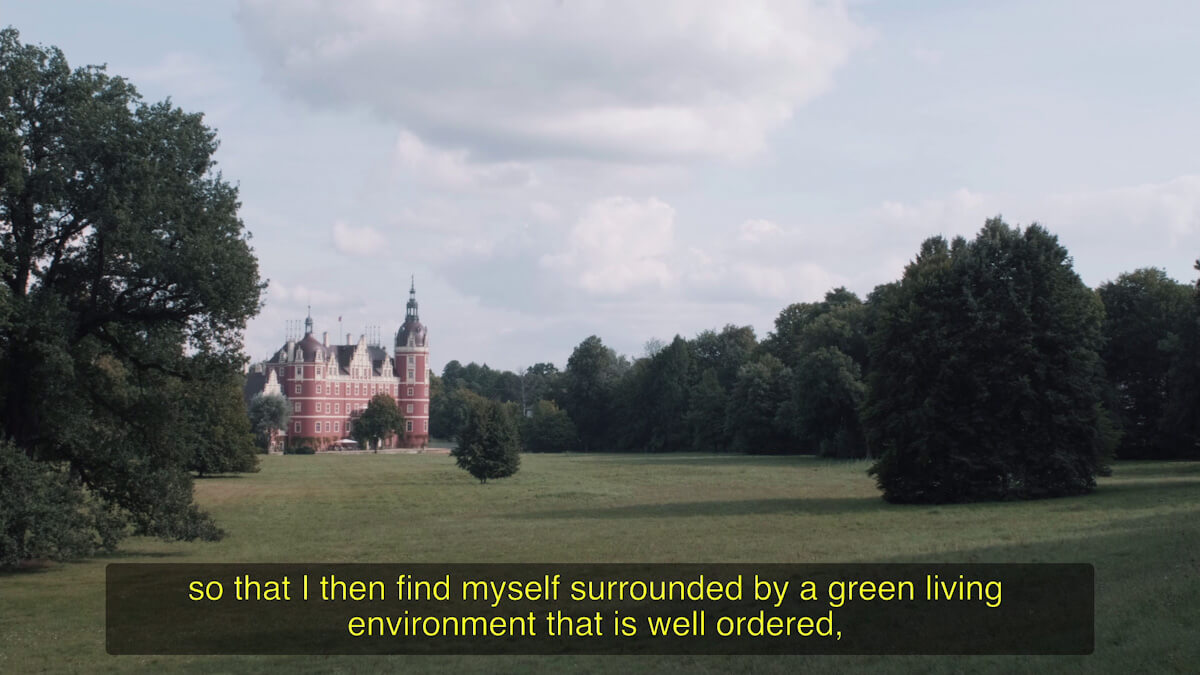
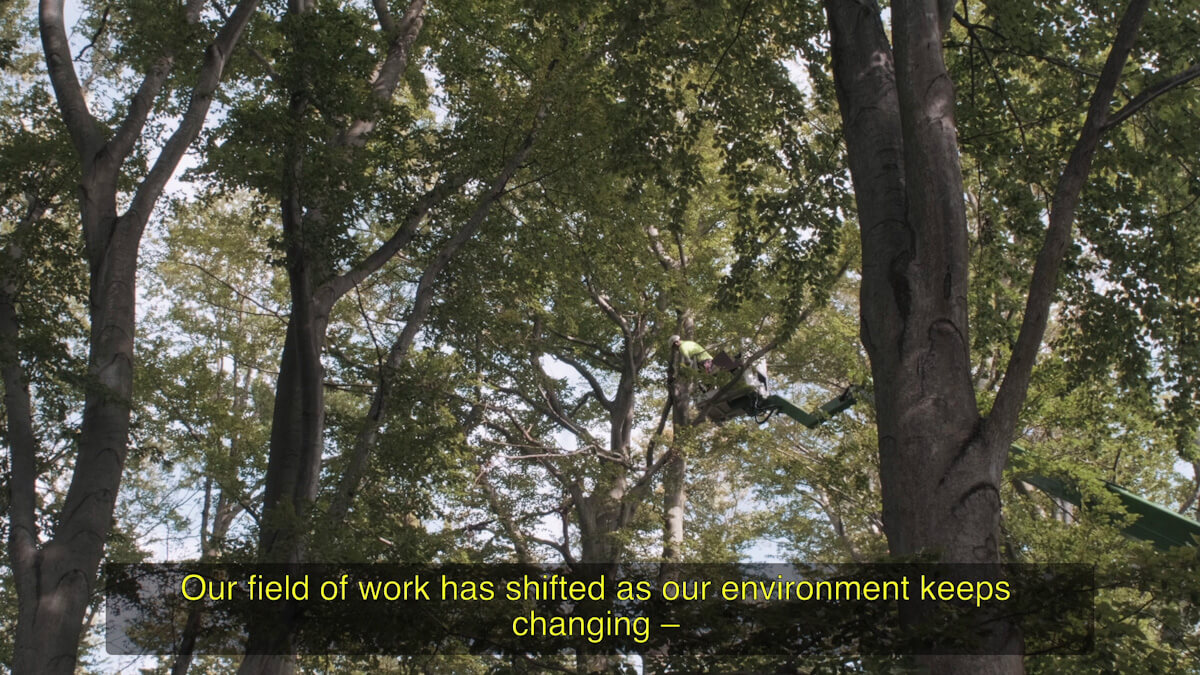
Produced for the tenth international Conference on Garden Art and Historical Dendrology in Cracow, Poland, this documentary examines the accelerating deterioration of the historic tree population in Fürst-Pückler-Park Bad Muskau — a UNESCO World Heritage Site straddling the German-Polish border, encompassing some 830 hectares of designed landscape.
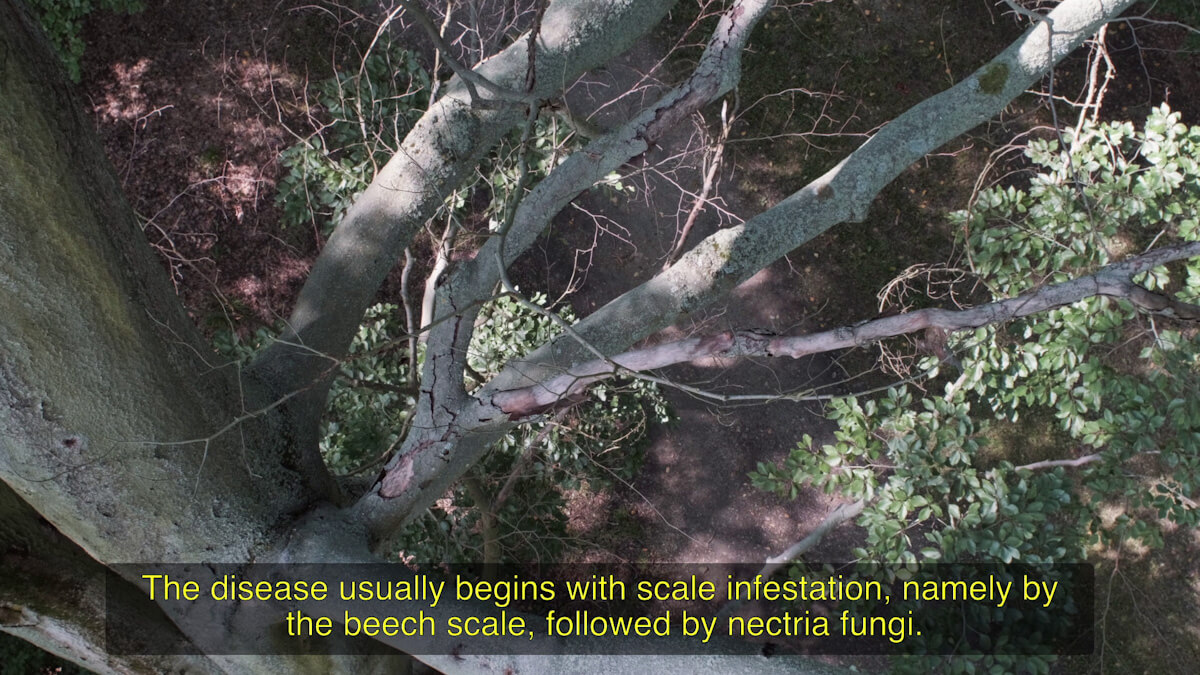
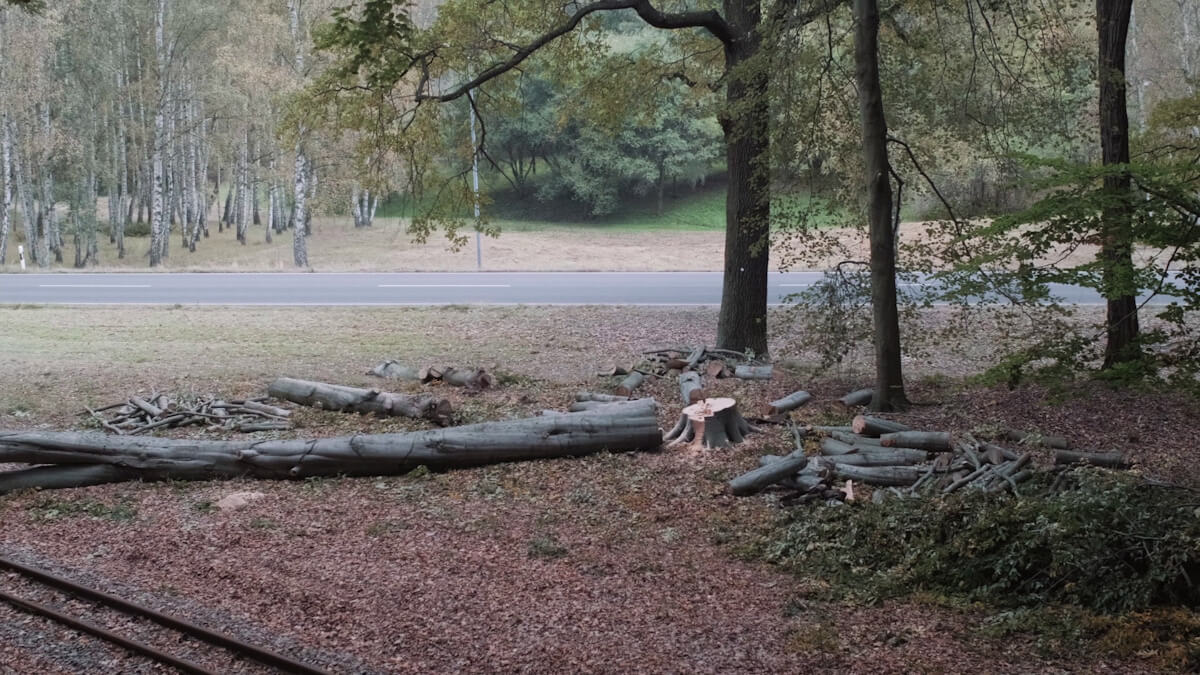
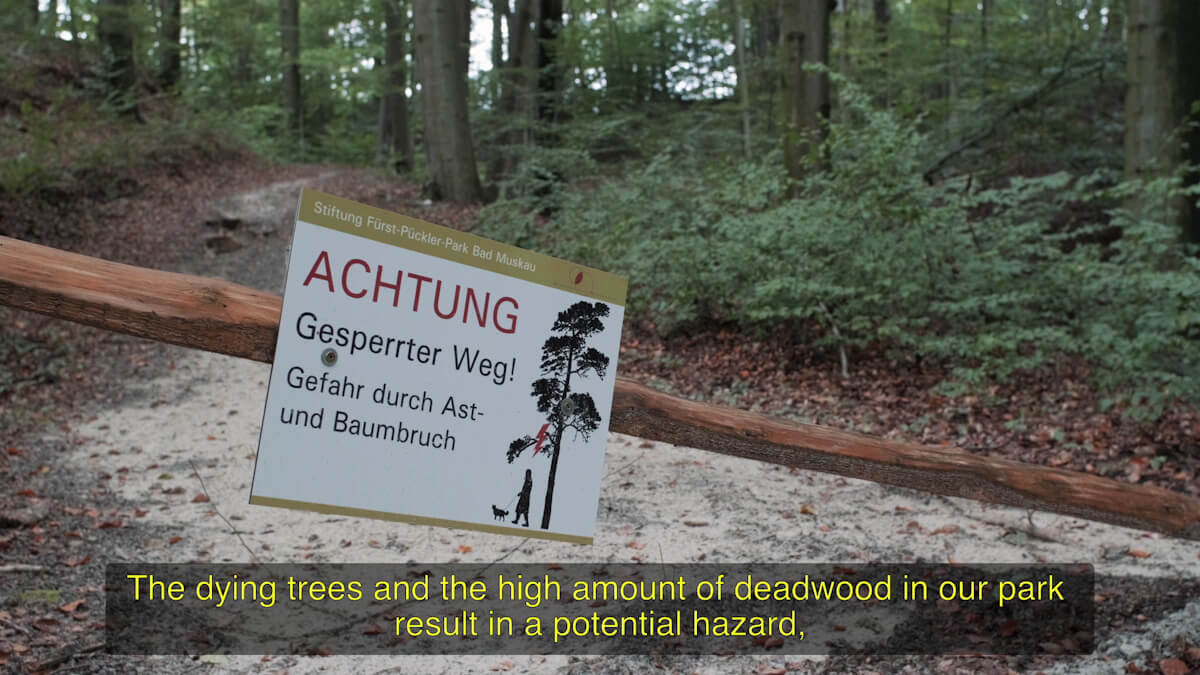
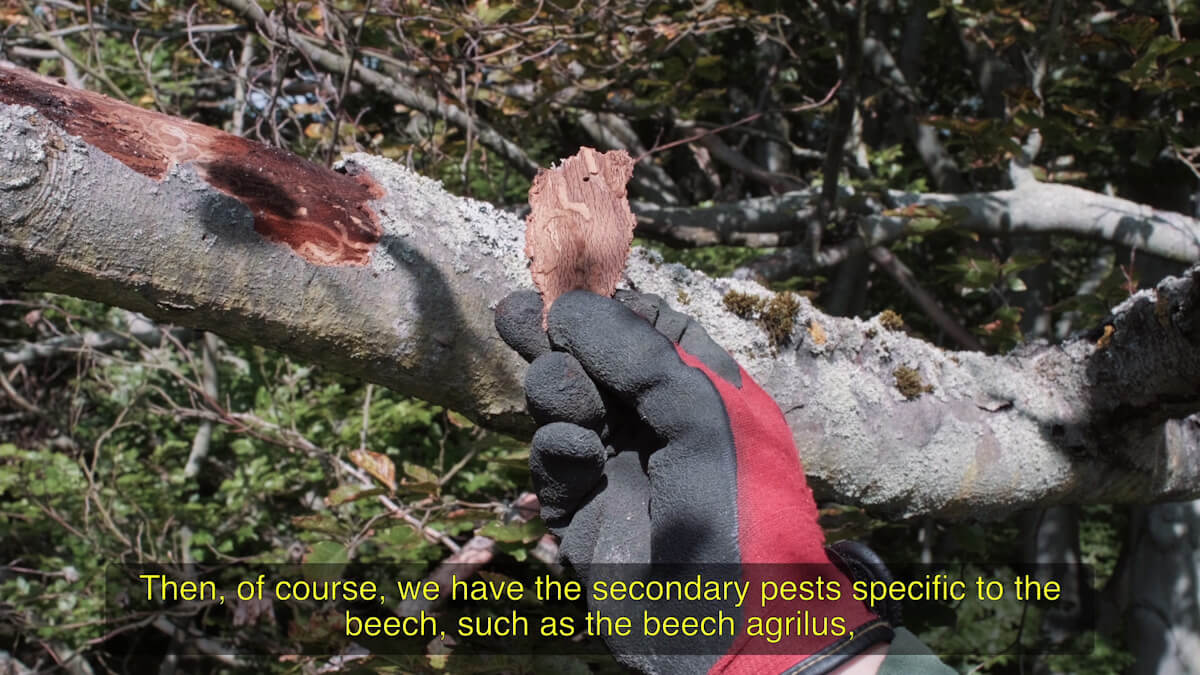
The film foregrounds a multifactorial crisis driven by the convergence of extreme drought events, advanced tree age, war- and mining-related soil disturbance, and the progressive spread of beech complex disease (Buchen-Komplexkrankheit) — a cascade pathology initiated by woolly beech aphid infestation and compounded by secondary fungal colonization and bark beetle predation. Park managers and arborists document how what was once a gradual, generationally managed succession has been replaced by exponential die-off, overwhelming existing maintenance and safety inspection capacities across approximately 17,000 registered trees.
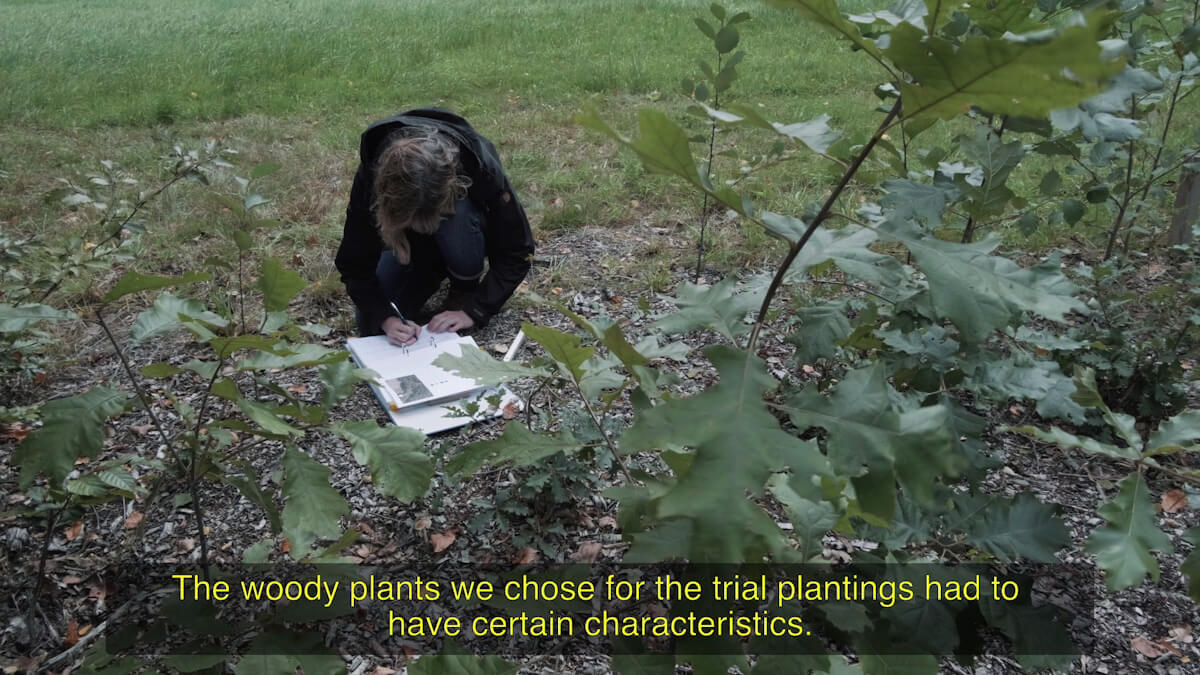
The film further explores adaptive responses: natural regeneration strategies, the experimental introduction of 8,000 climate-resilient woody species — including North American oak varieties — and the prospect of a binational arboretum functioning as a living climate laboratory. Broader conclusions position the park as a model for integrating urban green infrastructure with the ecological and aesthetic demands of a changing climate.
| TYPE | Documentary Short Film |
| FEATURING | Thomas Dietze, Berit Freiberg, Michelle Knopf, Cord Panning |
| FILMED & PRODUCED BY | Janis Vetter |
| SCREENED AT | Conference on Garden Art and Historical Dendrology, Cracow, Poland |
| YEAR | 2021 |